To access the Sequence settings in Salesforge you'd need to go to the dedicated tab in the Salesforge and click on the sequence name. Upon opening the sequence, you will be able to see edit sequence button in the upper-right part of the screen, thereby clicking the Settings tab. This article walks through each setting in the order you see it on the page:
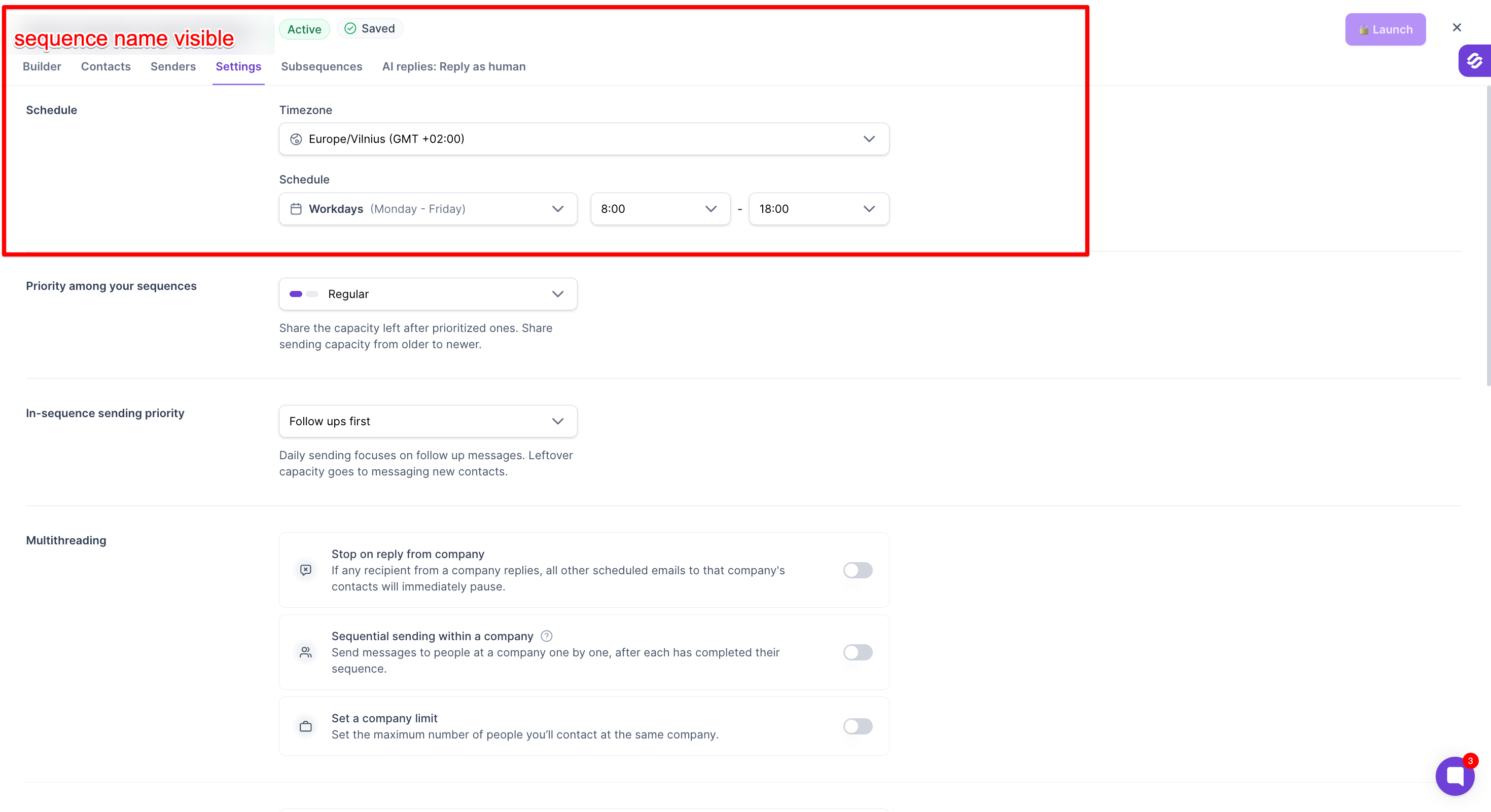
Choose when your sequence is allowed to send.
Timezone: The timezone your sending schedule follows.
Schedule: The days and hours emails can go out, for example Workdays (Monday to Friday) from 8:00 to 18:00.
Emails are only sent inside this window. If a step is due outside it, the email waits until the next available slot.
When you run more than one sequence at the same time, your sending capacity is shared between them. This setting decides how your sequence ranks against the others. With Regular, the sequence shares the capacity left after prioritized sequences, from older sequences to newer ones.
To learn more, read Sequence priority in Salesforge and Why only one sequence is sending and not all.
This setting decides what your daily sending capacity is spent on first inside a single sequence: follow-ups or new contacts.
With Follow ups first, daily sending focuses on follow-up messages. Any leftover capacity goes to messaging new contacts.
To learn more, read Sending priority: new contacts vs follow-ups.
Multithreading lets you control how Salesforge contacts several people at the same company. Salesforge treats all contacts who share the same email domain as one company. Contacts using free email providers such as Gmail or Yahoo are not grouped, so these settings do not apply to them.
There are three separate settings, and you can turn each on or off on its own.
Stop on reply from company
If anyone at a company replies, all other scheduled emails to that company’s contacts in this sequence are paused immediately. This stops you from emailing other people at a company after someone has already responded.
Sequential sending within a company
Salesforge messages people at a company one by one. Only one person from the company is in the sequence at a time, and the next person starts after the previous one has completed the sequence.
Set a company limit
Set the maximum number of people from the same company who can be active in the sequence at once. Contacts beyond the limit wait and are picked up later. Contacts who are already in the middle of the sequence keep progressing. Sequential sending is the same as a company limit of 1.
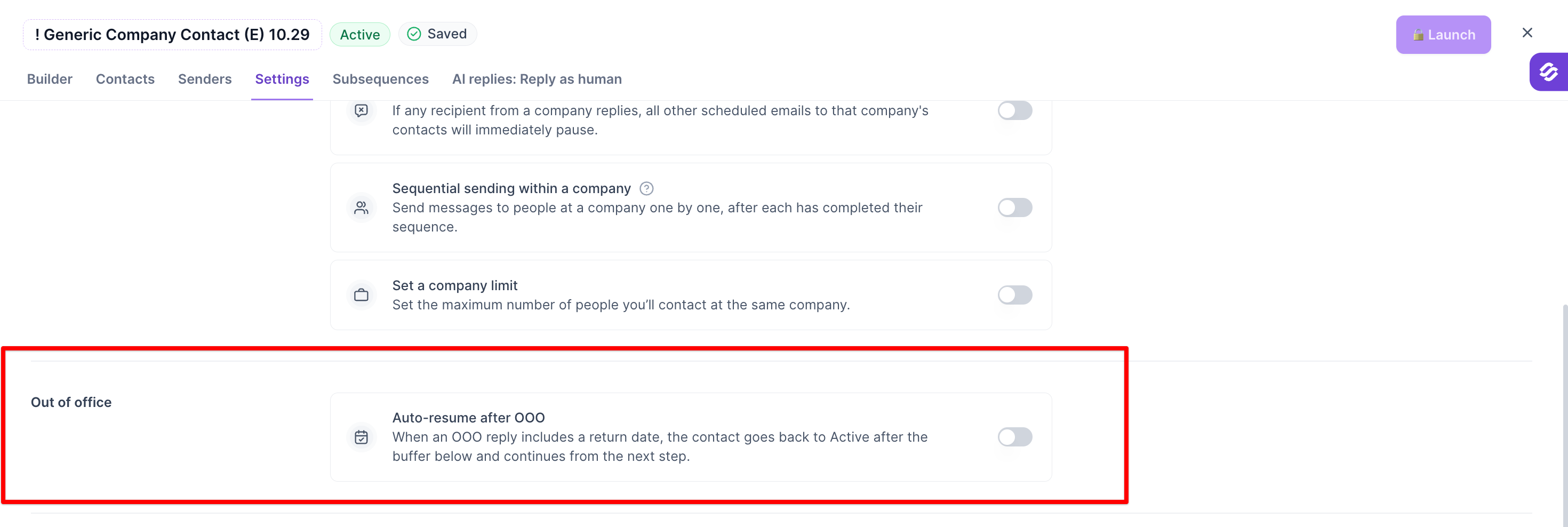
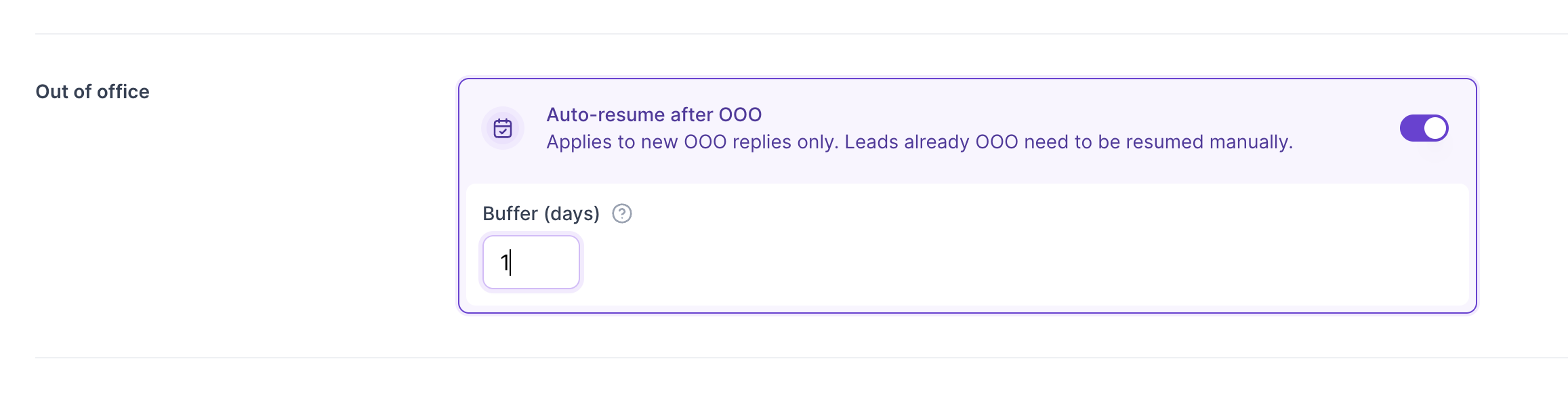
Auto-resume after OOO
This setting is off by default. When it is on and a contact sends an out-of-office reply that includes a return date, Salesforge puts them back into the sequence automatically.
How it works:
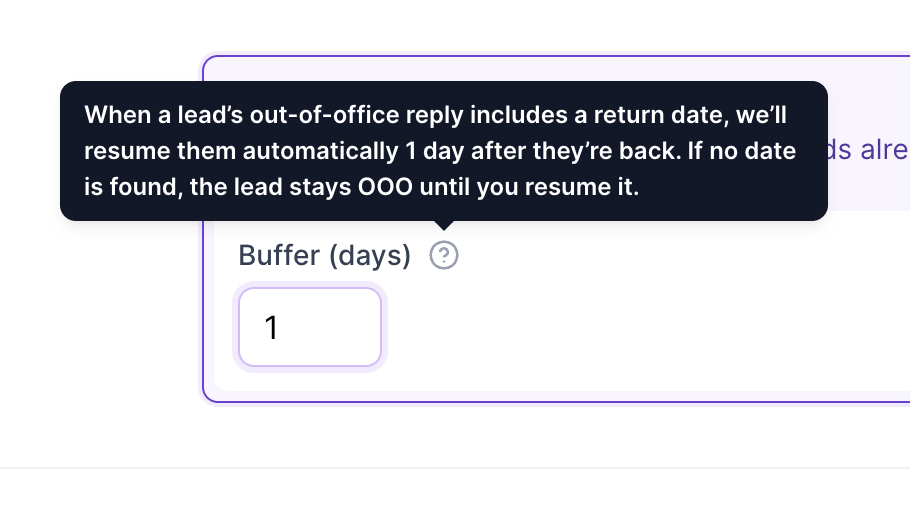
Turn on Auto-resume after OOO and set a buffer in days. This gives the contact some time to settle in after returning. The default buffer is 1 day.
When an OOO reply arrives, Salesforge reads the return date and schedules the resume for the return date plus your buffer.
On the resume date, the contact goes back to Active and continues from the next pending step. Wait times are not restarted, and your schedule window still applies.
What you can see and control:
On the sequence’s Contacts page, OOO contacts show when they are back and when they will resume.
Cancel auto-resume is available for any individual contact. That contact stays OOO until you resume them yourself.
Resume now works as before and clears any scheduled auto-resume.
The contact’s activity log records when they were auto-resumed or when auto-resume was cancelled.
Good to know:
If the reply has no return date, or the date is unclear or already in the past, the contact stays OOO so you can resume them manually.
A real reply or a manual status change cancels the scheduled auto-resume.
If a new OOO reply arrives, the dates are recalculated from it.
The setting only applies to new OOO replies. Contacts who are already OOO need to be resumed manually.
These options apply to email sequences.
CC and BCC
Add CC and BCC recipients to your emails.
Pause on click
Pauses the sequence for any recipient who clicks a link in your emails. This works only when Track link clicks is turned on under Tracking.
Pause on open
Pauses the sequence for any recipient who opens your emails. This works only when Track open rate is turned on under Tracking.
Note: Salesforge does not stop you from turning on Pause on click or Pause on open while the matching tracking is off. In that case, the pause will never trigger because there is nothing to detect. Also, if Plain Text is on, open tracking does not work, so Pause on open will not trigger.
Bounce shield
Bounce shield helps you avoid sending to addresses that are known to bounce. Before an email is sent, Salesforge checks the address against a list of bounced addresses. If the address is on the list, the email is not sent. If a hard bounce comes in for an address, it is added to the list and the contact is stopped in the sequence. When Bounce shield is off, bounces are recorded but nothing is blocked.
Plain Text
Sends your emails as plain text only, with no HTML, for the best deliverability. When Plain Text is on:
The open tracking pixel is not added.
Tracked links are replaced with the original links.
The email is converted to plain text at send time.
Because of this, Plain Text overrides your open and click tracking settings for the sequence.
Email service provider (ESP) matching
Matches the sender’s and recipient’s email service provider, for Gmail and Outlook only. For example, a Gmail contact is emailed from a Gmail mailbox, and an Outlook contact from an Outlook mailbox. Salesforge picks the matching mailbox with the most sending capacity left. If no matching mailbox has capacity, or the contact does not use Gmail or Outlook, the email is sent from any mailbox that has capacity, so sending is never blocked.
Custom opt-out at the bottom
Adds a hyperlink or text at the bottom of your email so recipients can unsubscribe. You can also set a localized opt-out link. Read more in Localized opt-out link.
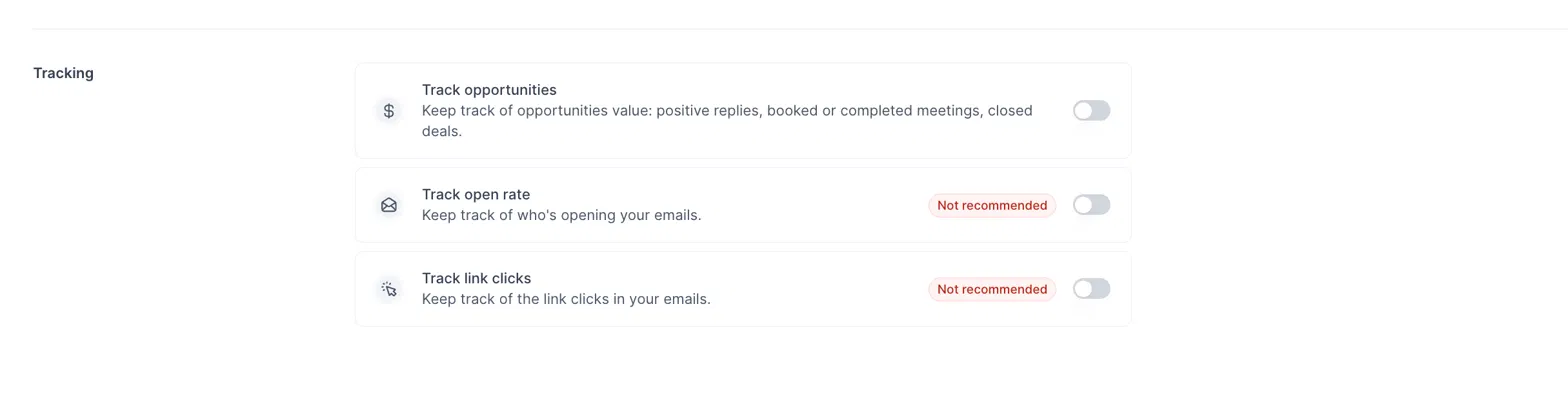
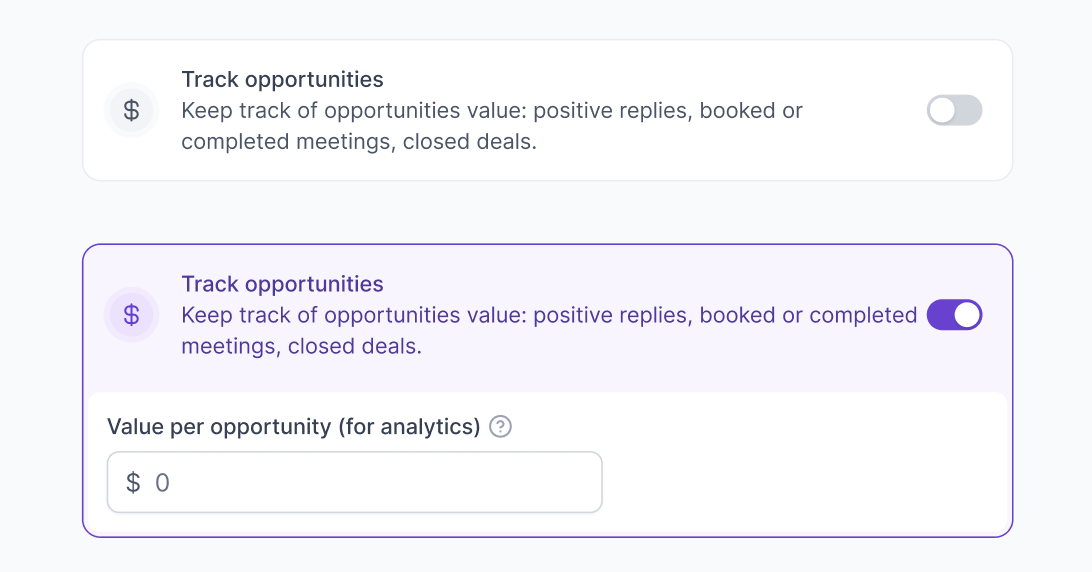
Track opportunities
Keeps track of the value of opportunities, such as positive replies, booked or completed meetings, and closed deals.
When you turn it on, you can set a Value per opportunity (for analytics). The default is 0.
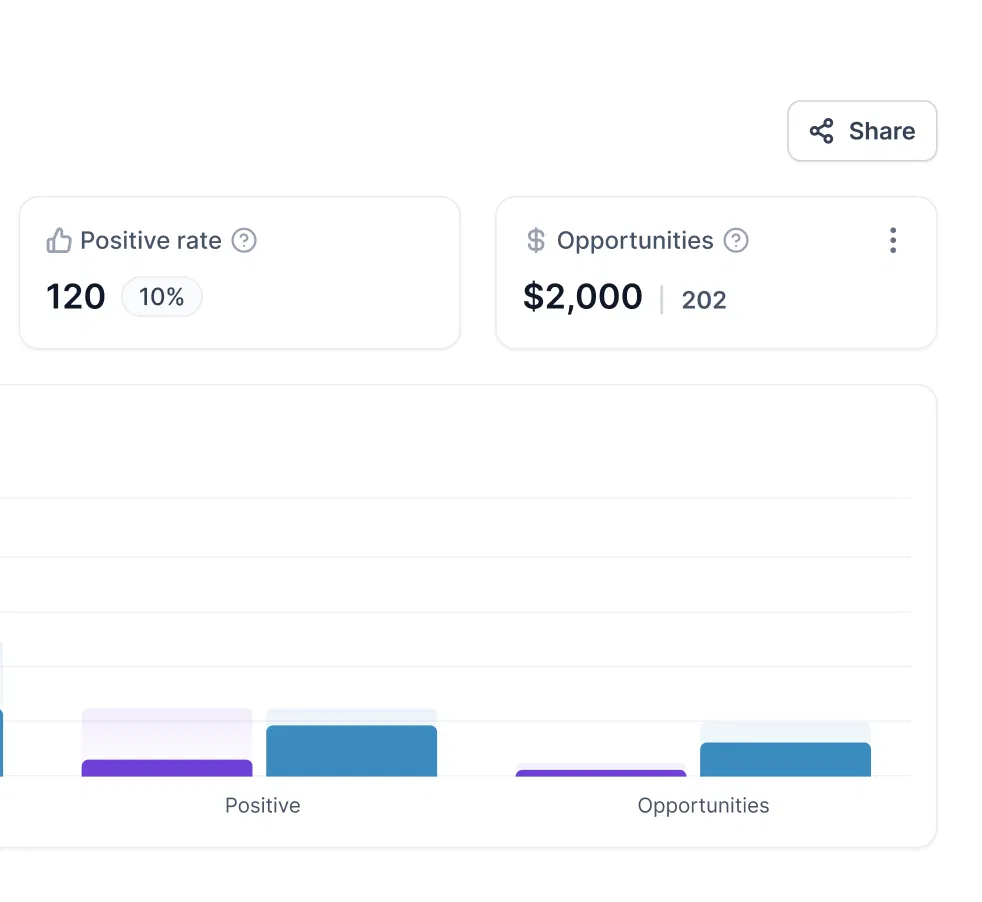
Once a contact meets the opportunity criteria, it is counted automatically in your analytics. Opportunities then appear in your Sales Funnel analytics, and you can filter by channel (Email or LinkedIn) to see which channel brings the most opportunities.
Track open rate
Keeps track of who opens your emails. This is marked as not recommended, and it is required for Pause on open.
Track link clicks
Keeps track of the link clicks in your emails. This is marked as not recommended, and it is required for Pause on click.
If you have any questions about your sequence settings, reach out to our support team through the chat widget and we will be happy to help.